Roots of Aryan Archaeology
In its early years, archaeological study in Germany was part of an international effort to organize, study, and report on the growing number of artefacts that were being discovered.
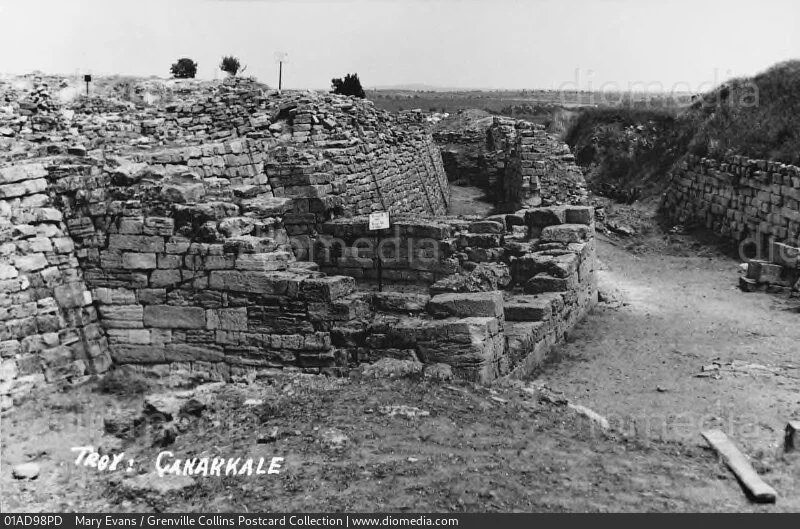
Stock Images, Medical Scientific & Historical Photos - DIOMEDIA
There was a clear need to control the work of enthusiastic but often not fully educated amateur archaeologists, such as German businessman Heinrich Schliemann, who is credited for his explorations of sites he associated with Homer’s epic poems but criticized for haphazardly digging trenches that damaged or destroyed artefactual evidence of the ancient city of Troy. (see above)
The first international archaeological institution—the Institute of Archaeological Correspondence (Instituto di Corrispondenza Archeologica)—consequently was created in 1829 by academics, artists, and diplomats from several European countries. It was the focal point for an international network of researchers who studied, gathered and recorded findings about monuments and artefacts, and opened them up to the public.
The institute, headquartered in Rome, concentrated on the study of classical Greek and Roman as well as Egyptian and Near Eastern archaeological discoveries. Encouraging research and sharing research findings, the institute launched the first archaeological periodical, opened a reading library and held lectures and discussions for researchers. It moved to Berlin in 1833 and was reorganized under Zentraldirektion, or a central board of directors.
German members of the institute changed the direction of the organization after the German Revolutions 1848-49, which tried but failed to fully unite German-speaking states of Bavaria, Liechtenstein, Rhineland, Prussia, and Saxony. The German government took control of the institute in 1870, made it a part of the Foreign Office in 1874, changed the name to the Kaiserlich Deutsches Archäologicsches Institut and later to the Deutsches Archäologicsches Institut or DAI.
One of DAI’s largest departments, the Römish-Germanische Kommission or RGK, was formed in 1902 to lead and report on excavations of archaeological sites across northern Europe and to conduct research on the prehistory and early history of the peoples who lived during the Neolithic and Late Antiquity time periods.
RGK thus became home for prehistory investigations.
Hard Times
DAI languished while Germany was at war and nearly closed because of the loss of financial support during the post-WW I economic depression. DAI increased the scope of its research by acquiring archeological research facilities in Istanbul and Cairo in 1929, but archeologists were often stymied and work halted while administrators fought for funding each year.
That changed when the National Socialists took power and more or less guaranteed annual financial support for the institute. Nazis also consolidated oversight of archaeological research within the Foreign Office, integrated the archeological institute with a new Ministry of Science and Education, and required Führerprinzip, which turned the president of the organization into a Führer who could take advice or totally ignore experienced members or the former leader of the Zentraldirektion.
When Nazis assumed power in 1932, they also introduced Gleichschaltung—the process of coordinating, synchronizing, or bringing everyday workers into line. For the archeological institute, that meant earmarking preferred candidates for research positions, excluding women and Jews, reducing the number of traditionally trained archaeologists, promoting archeologists willing to apply racial and social theories to their work, and using Nazi social and racial theories to guide and interpret facts and evaluate excavation sites.
The Early Days of Prehistory
The study of prehistoric archaeology was not popular in Germany in the late 1800s and early 1900s. It was taught in only a few German universities, received even less funding than other archaeological disciplines, and attracted less space in museums than ancient cultures from southern Africa and Melanesia,
Over time, it grew in importance and became increasingly contentious.
The RGK had an international orientation, holding the view that German prehistory was one aspect of the overall evolution of European civilization. It did not, therefore, zero in on Germanic aspects of its excavations when it visited ancient Roman sites in Germany or other prehistoric sites in southern and western Germany.
Many German prehistoric archaeologists opposed that universal viewpoint, however. Archaeologists began to demand that German prehistory become a priority and interpret archaeological findings in support of an ancient Germanic race, and they castigated classical archaeologists for characterizing, if inadvertently, prehistoric Germanic culture as a “dark age.”
Study of native German prehistory in universities was even blocked for a time. Rudolf Virchow, an internationally known surgeon and well-regarded amateur archaeologist, was in the forefront of that move. He opposed prehistorical archaeology as a separate, independent discipline, believing all archaeologists should approach prehistory widely, not within defined geographical-, political-, or philosophically-imposed borders, and take a holistic approach.
The cofounder of the Berlin Society for Anthropology, Ethnology, and Prehistory, Virchow used his work as a field explorer of ancient sites to argue that German’s history was diverse, not made up of a single race.
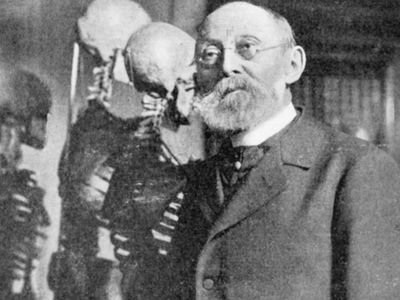
Autopsy History | The Complete History of the Autopsy
Gustaf Kossinna laid the groundwork for a nationalized prehistory program. He was the first chair of German Archaeology at Berlin University and in 1902 formed the Gesellschaft fur Deutsche Vor-geschichte (Society for German Prehistory). His 1912 paper German Prehistory, An Outstandingly National Discipline challenged members of the Berlin Academy of Sciences to at the very least support German prehistory as much as they supported Egyptian, Greek, Oriental, and Roman archaeology.
Kossinna felt German prehistory could help rebuild the country after WW I, noting the need to emphasize “German-national people, in contrast to the internationalizing tendencies, which threaten to wipeout our healthy ethnic characteristics.” (Megan Young: The Nazi’s Archeology. Nebraska Anthropologist, University of Nebraska, Lincoln, 2002, p 30)
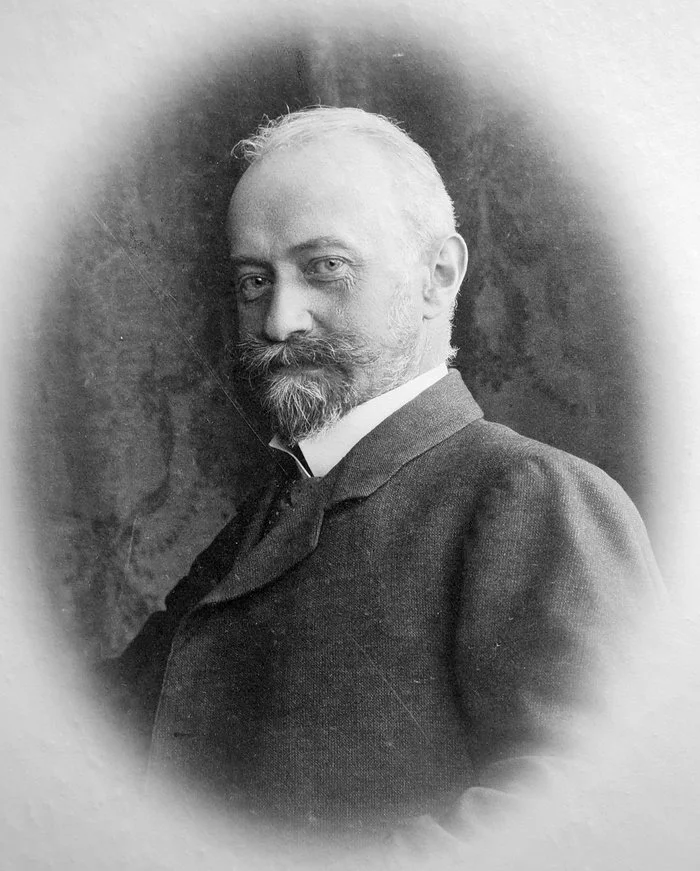
Kossinna-1-mainzer-beobachter
Expansion Under Nazi Rule
Soon after the Nazis took power in 1933, prehistoric archaeology began to thrive. As Megan Young described in The Nazis’ Archaeology, state funding rose dramatically, universities created chairs in prehistoric archaeology, and several institutes were formed: the Institute for Prehistory in 1938, the Institute for Pre- and Early History in 1939, and institutes for rune research in the late 1930s.
New museums were built, and older museums, even outside Germany in occupied countries, now displayed prehistory exhibits. Excavations were opened to members of the public as “open-air museums,” and documentaries of German prehistory were shown in public theaters.
Prehistory archaeology became popular in Germany, with members of the public joining organizations that promoted it, such as the Confederation for German Prehistory, and it was well regarded by outsiders. “British archaeologists held German archaeology in high regard. Some were even jealous of the state funding it received and the high public interest and involvement.” (Young, p 31)
Quoting Grahame Clark, Young notes: “It reflects a situation in which a whole people thrills with a consciousness of its past and in which a knowledge of national archaeology is regarded as much a part of the normal equipment of children as algebra of Latin verbs.” (Young, p 31)
That popularity disguised the aims of the Nazi Party—propaganda, indoctrination, justification of racial cleansing and genocide--and the overall corruption of scientifically trained researchers.
Future Historka blog posts will describe the organizations that led German prehistory archaeology under the Nazis, the types of research they conducted, the archaeologists who did the work and how they did it, the myths and political policies that resulted.
Sources:
Deutsches Archäologisches Institut.
Heinrich Harke (Tubingen): Archaeology and Nazism: A Warning from Prehistory. Archaeological and Linguistic Research, Humbolt-Conference, Simferopol, Yalta, September 20-23, 2012,
Klaus Junker: Research under Hitler: The German Archaeological Institute 1929-1945 [Lecture, University of Urbana-Champaign, September 2003]
Megan Young: The Nazis’ Archaeology, Nebraska Anthropologist, University of Nebraska—Lincoln, 2022.
Laura Christensen: The Evolution of Prehistory Archaeology under the Third Reich. Department of Sociology and Archaeology, University of Wisconsin, La Crosse, 2010
Megan Young: The Nazi’s Archeology. Nebraska Anthropologist, University of Nebraska, Lincoln, 2002.
https://en.wikipedia.org/wiki/Heinrich_Schliemann) (DAI - history(https://www.dainst.org/standort/-/organization-display/Z19STUj6lzKB/14595)
